

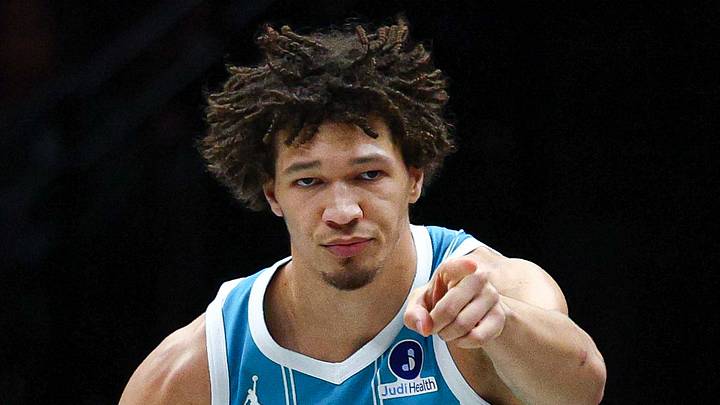
The post-Lamelo Ball era was a chance to build a sustainable culture and an exciting vision for the future. Yet, the Charlotte Hornets' disjointed efforts do little to inspire confidence. A rebuild suggests a franchise will build a young core and develop together; by opting out of Tidjane Salaun's rookie team option, they are doing the opposite. Now, Salaun's performances suggest that, with time, he could have become a productive option in Charlotte.
Charlotte should be in a rebuild. While acquiring Naz Reid was a consequence of sending Ball to the Minnesota Timberwolves, and Grayson Allen arrived when Miles Bridges was traded to the Phoenix Suns, the amount of time each player spends on the floor sends a confusing message to their fan base.
Of course, a franchise's transition requires veterans to help teams bed in their younger players, but a 27-year-old Reid doesn't offer that level of leadership. Kyle Lowry at the Philadelphia 76ers, Mike Conley at the Timberwolves, and even Alex Caruso at the Oklahoma City Thunder were incredible professionals with lessons to teach.
Nothing in Reid's career suggests he can offer anything of substance other than winning basketball -- and even that isn't working out. The Hornets clearly aren't ready to compete with the Eastern Conference's superpowers in the next few years, so why would the organisation not remain patient with younger prospects and give them time to develop?
Salaun is the victim of a confused front office
Leaders have a clear, direct vision and fight through adversity while their blueprint slowly comes together. Charlotte's front office appears indecisive and, in a sense, naive. Either the Hornets' hierarchy wants another franchise to decide for them by offering significant draft capital, or they genuinely believe Reid and Allen are championship needle-movers.
Both are worrying propositions. The indecision is hurting the younger players, creating a murkier future for the franchise. Salaun has struggled for efficiency throughout his career, but with LaMelo setting the standard for the team's up-and-coming prospect, it is no surprise their decision has been questionable.
Salaun's minutes this season have been inconsistent. While the 21-year-old is averaging 14.8 minutes per game, he has been used sporadically and hasn't been allowed to build momentum. When inexperienced players are used in this fashion, they lack composure, which leads to bad decisions in key moments. This defines Salaun's showing perfectly. However, his passion and work ethic always shine through.
Again, Salaun was inefficient during the Hornets' 119-80 blowout loss to the Boston Celtics, shooting just 27.3 percent from the floor, but he remained aggressive and resilient -- the same can't be said about his veteran teammate, Reid. Salaun scored 13 points and grabbed 4 rebounds in around 23 minutes.
It may be strange to applaud poor shot-making, but young prospects will perform like this occasionally. If the Hornets truly are in a rebuild, they must accept that this scenario will happen. Declining a rookie team option doesn't seem like the action of a franchise in transition.
Salaun might not be a generational talent, but the next two years were an opportunity for the Hornets to embrace development and see how high their prospects could reach. Instead, their contradictory approach is leading them on a path to absolutely nowhere.
 Add us as a preferred source on Google