

The Charlotte Hornets’ jump from a 19‑win season to a Play‑In berth is a genuine achievement, a sign that the franchise is finally moving in the right direction. But after falling to the Orlando Magic and missing the playoffs, the reality is unavoidable: worthwhile progress now requires difficult roster decisions. Several players are likely headed elsewhere before next season begins.
There is still a clear path to building a true contender around LaMelo Ball, Brandon Miller, and Kon Knueppel, the three pillars of Charlotte’s future. With that core in place, every other piece should be evaluated with a critical eye. For Jeff Peterson, nothing should be off the table as he works to reshape the roster, and these next moves will hinge on identifying which players have become expendable—and why.
Tre Mann
Tre Mann’s season became one of the biggest disappointments on the roster. It began as a promising stretch, where his creativity as a shot‑maker earned him roughly 20 minutes a night. This was mostly while LaMelo Ball battled ankle issues and Charles Lee experimented with expanded rotations, but it quickly unraveled as the year progressed.
Once Sion James emerged, Coby White arrived, and the rotation tightened, Mann’s role collapsed. Over the past two months, he’s averaged just four minutes per game, appearing almost exclusively in blowouts. The drop‑off isn’t just about opportunity. His numbers back up the coaching staff’s decision. Mann posted a rough 46 percent true shooting despite a high‑usage role, eliminating the scoring efficiency that was supposed to be his calling card off the bench.
Given the combination of diminished production, shrinking opportunity, and the team’s shifting priorities, it’s difficult to envision Mann returning next season. All signs point toward him continuing his career elsewhere by the time the 2026–27 campaign arrives.
Miles Bridges
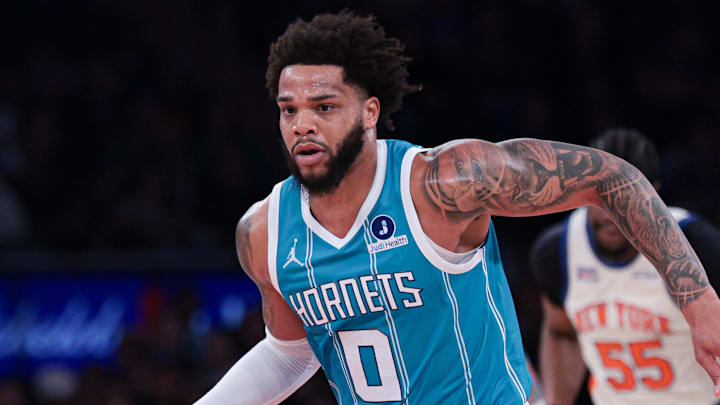
Miles Bridges inconsistencies showed up in Orlando, and there’s a reason why he’s the active leader in most games played without making the playoffs. Bridges is earning $25 million per year, the second‑highest salary on the roster, yet his impact doesn’t match that investment. He can score 20‑plus on any given night, but the weaknesses are too significant to ignore.
Nearly every player on the roster shoots the three better than his 33.3%, a major issue for a team built around spacing and quick‑trigger perimeter shooting. Even when he’s left wide open, there’s little confidence the shot will fall.
The advanced metrics paint the same picture. Per Cleaning The Glass, his minus-5.9 on/off differential ranks in the 23rd percentile league‑wide, while every other starter sits at the 73rd percentile or higher. In other words, he’s the clear weak link in an otherwise strong unit.
Bridges is a solid player, but “solid” isn’t enough for a team trying to break into true contention. Replacing him with a two-way forward or someone who’s stronger beyond the arc could elevate Charlotte’s starting five into the league’s best. It's evident by the Play-In Tournament that the Hornets have to address their frontcourt issues.
With his contract set to expire next season, the timing to move on makes too much sense to ignore. Bridges is the longest‑tenured Hornet, but he has also become the most painfully obvious spot where Charlotte can upgrade its starting lineup.
Grant Williams
Grant Williams has been a meaningful and reliable part of Charlotte’s rotation, offering the kind of versatility coaches love—able to function as a hybrid big, defend multiple positions, and space the floor in virtually any lineup. But if the Hornets look to position themselves for a major (non-wild package) move like pursuing Giannis, his situation makes him one of the most logical trade pieces on the roster.
His $14.2 million expiring contract is exactly the kind of contract teams use to anchor a package for a high‑end player. If Charlotte wants to chase a true difference‑maker, Williams’ deal becomes a valuable tool, especially since contenders consistently covet three‑and‑D players like him.
From a roster‑building perspective, the logic is straightforward. Williams is coming off a significant injury, he’s unlikely to be re‑signed, and his contract carries enough weight to help facilitate a blockbuster without gutting the core. Williams is the more replaceable player than an elite one. Moving him would give the Hornets more financial flexibility and a cleaner path to absorbing a superstar‑level contract.
 Add us as a preferred source on Google