

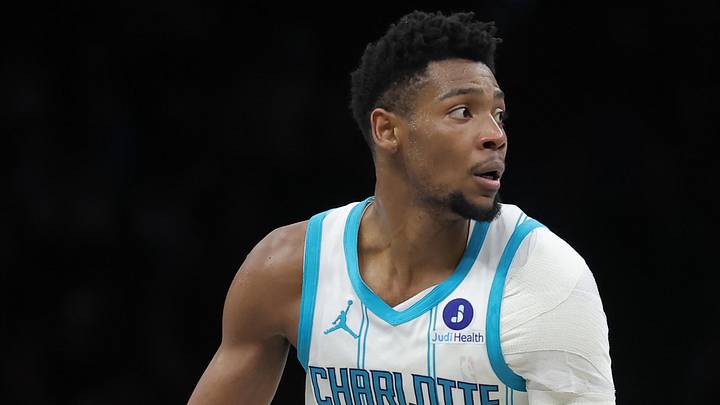
Brandon Miller is headed into another offseason of rehab instead of uninterrupted development, this time recovering from surgery on his left shoulder subluxation injury. It’s a tough setback for a player the Hornets consider a cornerstone player, and it puts Charlotte in a brutal spot as they weigh whether to offer him a rookie max extension. The financial ripple effects of that decision could shape the franchise for years.
Fans are split. Some believe Miller has shown enough to justify the max. Others want him to play out the year and prove he can stay healthy. And plenty fall somewhere in between. Even while battling the shoulder issue and wearing layers of wrap for most of the season, Miller still led the Hornets in scoring at 20.2 points per game.
What the front office chooses to do this summer won’t just determine Miller’s future. It will define the direction of the entire roster and the next phase of the Hornets’ competitive timeline.
Sam Vecenie offers clear insight on the Brandon Miller dilemma
On a recent episode of the Game Theory Podcast, Sam Vecenie broke down how the Hornets should approach the offseason—and specifically, how they should handle Miller’s looming extension. Vecenie highlighted the tension between Miller’s talent, his injury history, and the team’s salary‑cap reality:
“So the way I'm approaching a Brandon Miller extension this summer is if he's willing to do something like $30-35 million a year, I'm pretty open to that. Honestly, I'm willing to look at that and I'm willing to say, 'Okay, cool. This is our number.' Otherwise, I think I want to see this another year, especially given the injury stuff that has just popped up."
Vecenie’s stance is essentially a “prove you’re healthy” approach. And in the grand scheme of things, $30–35 million annually is still a lot of money.
Letting the situation play out another season may be the most rational path. It gives the Hornets time to see whether Miller can stay on the floor, expand his game, and show he’s worth a long‑term commitment.
Miller can work on things, as his lack of rim pressure leaves a lot to be desired. It might even push him to play with more urgency in a contract year, which is exactly what this franchise needs to end the playoff drought.
A rookie max extension shouldn’t even be on the table at this point
Committing 25% of the salary cap to a player who hasn’t yet exceeded expectations or proven he can stay consistently available would be a reckless gamble for a team still trying to establish its foundation. Miller is not worth that amount right now.
More teams are finding rookies in the draft on cheap deals to make an impact early on to build around a few cornerstone players. The Hornets may be heading this route in the draft.
Charlotte should be looking to negotiate in the range that Vecenie mentioned. It will help maintain flexibility with other contracts down the road (Knueppel, Diabate, Ball).
Miller was the No. 2 overall pick in the 2023 NBA Draft, and he’s turned out to be a good player so far. But only being good with availability issues isn’t going to cut it.
 Add us as a preferred source on Google