

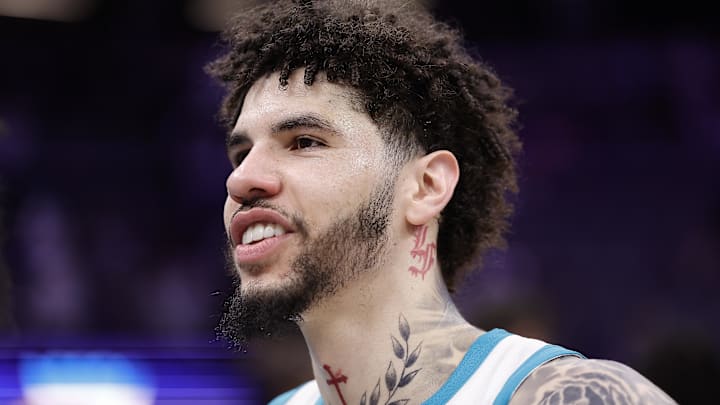
LaMelo Ball is undeniably a special talent, as few players in the league can match his blend of creativity and feel for the game. But NBA writer Rob Mahoney recently raised an intriguing question during an appearance on The Bill Simmons Podcast. In the episode, Mahoney asks Simmons, “What is a 35‑year‑old LaMelo Ball like? Like who is that person?”
Simmons fires back jokingly: “Like White Chocolate on the Memphis Grizzlies in the mid‑to‑late 2000s”. Mahoney’s point goes deeper than on‑court comparisons. He’s really asking: as Ball moves into his thirties, how does he evolve not just as a player, but as a professional and as a person?
Critics have questioned Ball’s maturity and professionalism, and while those concerns are often overblown for a 24‑year‑old, it is fascinating to imagine what his game and identity will look like a decade from now. So the real question becomes: which parts of Ball's game will age gracefully, and which might not?
Age is only a number in basketball
Ball’s offensive wizardry has never depended on elite athleticism, and that’s a promising sign for his longevity. At 6’7”, with elite vision and rapid processing speed, his playmaking should remain a strength well into his thirties.
History shows evidence of that. Look at legendary facilitators like Magic Johnson or Chris Paul, whose great assist‑to‑turnover ratios stayed with them long after their primes. Basketball IQ doesn’t hurt fade once you hit your thirties.
His deep shooting range is another skill with real staying power. Players such as Stephen Curry and Damian Lillard have shown that long‑distance pull‑up shooting can age gracefully, even as athleticism naturally tapers off. That bodes well for Ball, whose ability to stretch defenses from well beyond the arc creates a level of gravity that most players can’t replicate.
Durability being a caveat
It appears Ball has finally put his ankle issues behind him, logging 58 games so far—his second‑highest total in any season. But as encouraging as that is, age introduces a new variable that every player eventually has to confront.
Injuries tend to pile up over time. It’s a bit like owning a car: the miles add up, the wear and tear becomes more noticeable, and maintenance becomes more frequent. NBA players experience the same reality. Recovery takes longer, rest becomes more essential, and nagging injuries can turn into chronic ones.
For Ball, durability has always been the biggest obstacle, and that challenge won’t magically disappear as he gets older. Outside of that, his game projects to age quite well. We’ve already seen real growth in his leadership, and the old “not a winning player” narrative has largely faded. His talent gives him a wide margin for error, but ultimately, his maturity and durability will shape how long he’ll last as a top tier player in the league.
 Add us as a preferred source on Google